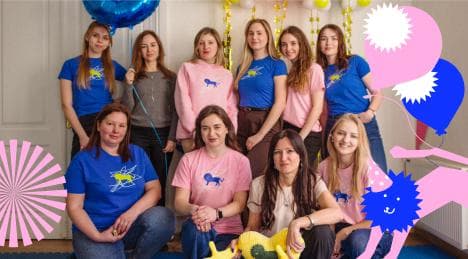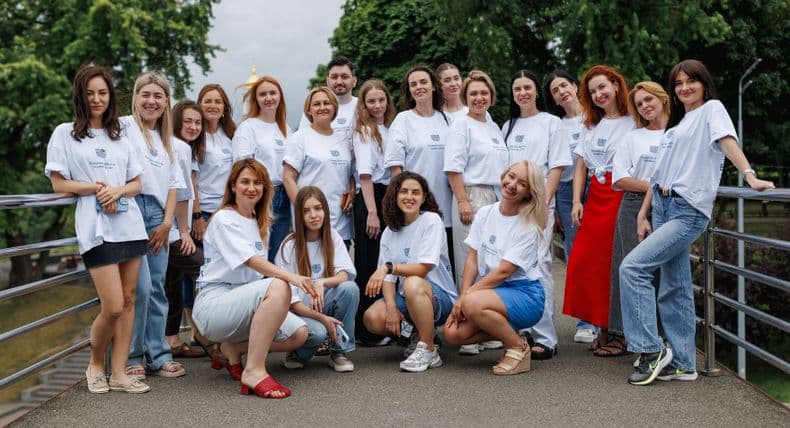
In March 2022, several Ukrainian women moved to Warsaw after russia started the full-scale invasion of Ukraine. In their peaceful lives, they had worked in business, media, and the creative industries, managing large projects and building reputations as professionals capable of creating sustainable systems.
When the war began, they decided to do what they knew best: to create a charitable foundation people could trust.
That is how the Future for Ukraine formed
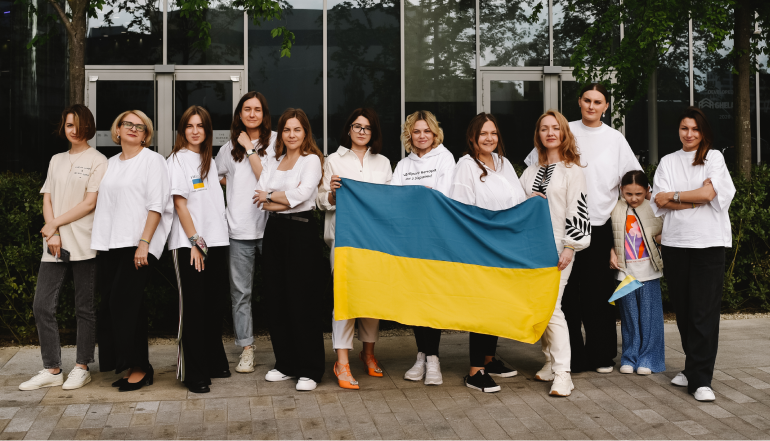
At the beginning, the team aimed not to build a temporary initiative but a transparent, well-managed charitable organization with clear governance principles and long-term assistance programs.
No one knew how large the project would become, but everyone believed it could grow into a major support system for Ukrainians someday.
Over four years, the foundation has indeed evolved into an international humanitarian organization operating as a union of three independent charitable foundations in Ukraine, Poland, and the United States. The team has raised more than a quarter of a billion hryvnias in charitable support from Ukrainian and international donors.
Today, Future for Ukraine operates in three key areas: medical assistance, support for women, and assistance for children.
The foundation helps veterans with amputations, children with autism spectrum disorders from internally displaced families and frontline regions, as well as women who have experienced sexual violence during the war or live with uncertainty due to the captivity or disappearance of their loved ones.
Behind every program are people and their stories.
Veterans who learn to walk again after severe injuries.
Women who find the strength to move forward after trauma.
Children who say their first words after months of therapy.
How charity has changed during the war
The full-scale war has dramatically transformed the charitable sector in Ukraine.
In 2022, most assistance was directed toward supporting the veterans. People donated actively, new foundations were created rapidly, and the call to “Stand with Ukraine” truly attracted international donors.
Over time, it became clear that the war would last much longer. Charity also began to change. From urgent needs of “here and now” assistance, the sector gradually shifted toward systemic operations that help people rebuild their lives in the long term.
This is exactly the approach the Future for Ukraine team built into its work from the very beginning.
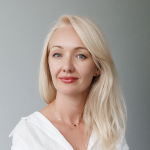 Olena Nikolaienko, president of Future for Ukraine in the United States, strategist, and head of international fundraising for the foundation.
At the stage of developing the foundation’s strategy, we based our work on resilience and sustainability. In fact, this answers the question of what the foundation will do if, at some stage, the donations stop. Such an approach directly influences the organization’s reputation and its reliability in the eyes of philanthropists and grant providers
According to her, donors are interested not only in the project idea.
“They want to understand how you will complete the work if the funding runs out. Where will you find resources for a year-long therapy program for children on the autism spectrum and for paying the specialists who work with them?”
Supporting children
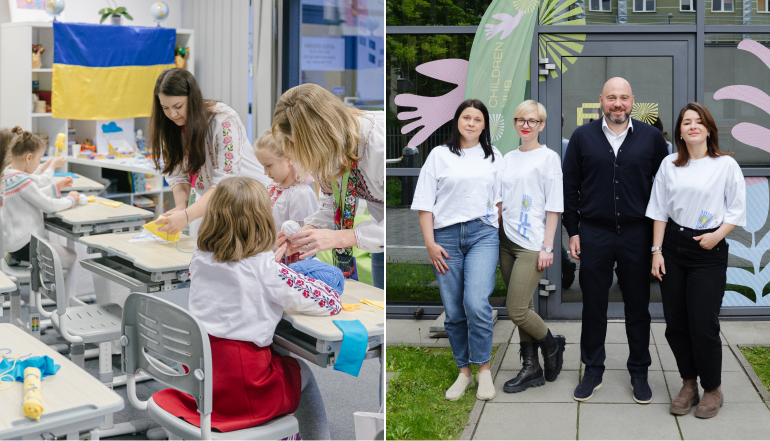
The foundation’s first major project was CHILDREN HUB in Warsaw.
It became a safe space for Ukrainian children and their mothers who had fled to Poland because of the war. Here, children can attend educational activities, communicate in Ukrainian with their peers, and feel a familiar childhood environment.
During this time, their mothers were dealing with practical aspects of life abroad, such as looking for jobs, handling documents, or simply taking a few hours to rest.
Over time, CHILDREN HUB became a second home — a small corner of Ukraine abroad — for more than 1,000 Ukrainian families in Poland.
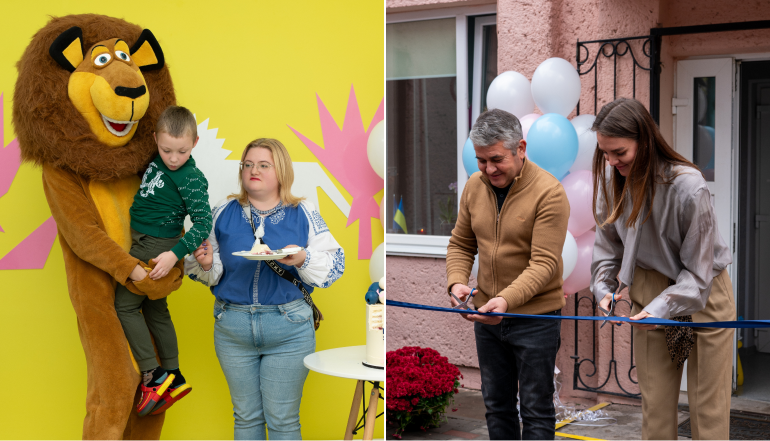
In March 2023, the foundation launched a new project to support children with autism spectrum disorders. This led to the creation of LEVCHYK SPECTRUM HUB for IDP children on the spectrum.
Many families raising children with ASD lost their homes and stable incomes due to the war. At the same time, they lost the ability to pay for corrective therapy, which on average costs around UAH 35,000 per month.
The first center opened in Lviv with the support of philanthropist Vadym Stolar.
 nna Kovalova, founder and CEO of Future for Ukraine
LEVCHYK is a free social support center where children on the spectrum receive systematic correctional help. Each child works individually with specialists in sensory integration, psychologists, speech therapists, and ABA therapists. Children also attend group music and art therapy sessions. The program lasts one year and can be extended if necessary
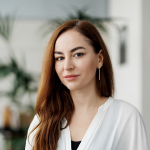
In 2025, the project expanded. In partnership with the Mykolaiv City Council, a second LEVCHYK SPECTRUM HUB was opened in Mykolaiv.
According to Mykolaiv Deputy Mayor Anatolii Petrov, by the end of 2025, more than 300 children in the city had been diagnosed with autism and required regular professional support.
 Olha Hliuza, head of the Helping Children direction
For children on the spectrum, therapy is essential. Through such sessions, they learn to pronounce their first words, manage emotions, and interact with peers. Thanks to the LEVCHYK program, children have the opportunity to study in schools
Over three years, LEVCHYK SPECTRUM HUB has provided more than 17,000 therapy sessions.
Prosthetics for veterans
The foundation’s medical direction began with a single case.
Ukrainian veteran Oleksandr Chaika suffered a complex amputation with hip disarticulation. Because of the complexity of the case, he was denied prosthetic treatment in Ukraine.
The search for a solution led the foundation’s team to the United States.
There, Olena Nikolaienko met Michael Corcoran, founder of the Medical Center Orthotics & Prosthetics.
Specialists at the center have more than 30 years of experience in prosthetics for veterans of the wars in Iraq and Afghanistan.
At the MCOP clinic in Silver Spring, Oleksandr received a state-of-the-art prosthesis with a bionic knee and underwent a gait optimization program.
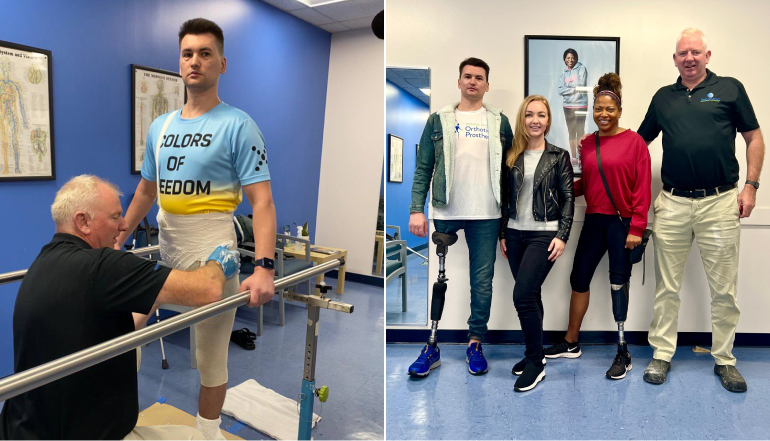
Such prosthetic treatment can cost more than USD 100,000, but through the FFU program and with the support of the MCOP center, the veteran received it free of charge.
This case became the beginning of a large program.
In partnership with MCOP, Future for Ukraine has provided high-tech prosthetics and rehabilitation for 92 Ukrainian veterans.
In 2023 and 2024, the foundation successfully passed verification by the Pfizer Foundation and received grants totaling USD 1,000,000 for the prosthetics program.
In 2023, the foundation in the United States obtained 501(c)(3) nonprofit status, significantly expanding its international fundraising potential.
In 2025, the foundation received one of the largest international grants in its history. The Government of Iceland and Embla Medical HF provided USD 11.6 million to implement a three-year prosthetics program.
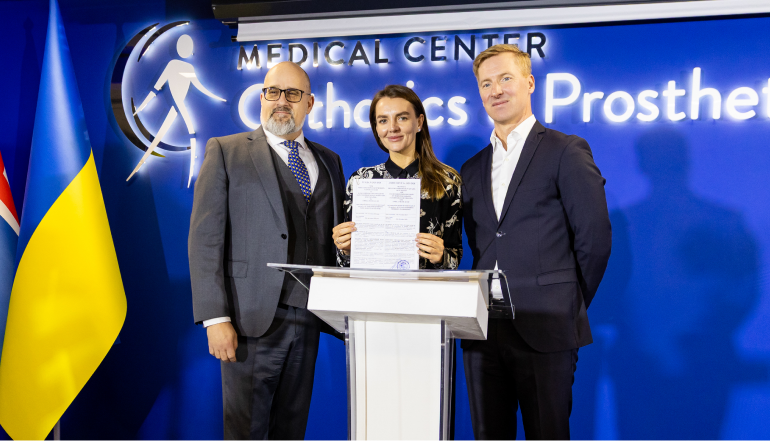
Thanks to this project, 1,000 Ukrainians with amputations will be able to receive free functional lower-limb prosthetics.
Psychological support for women
The foundation’s third area of work is psychological assistance for women.
Initially, the GIDNA project was a general psychological support program, but the team quickly realized that a significant portion of requests were related to sexual violence during the war.
Today, the program provides free and anonymous psychological assistance to women who have experienced or witnessed sexual violence.
Participants can receive up to 20 individual therapy sessions with a psychologist.
Within the “Ambiguous Loss” direction, psychologists work with women whose relatives are missing or held in captivity.
Among the participants are women from the Association of the Azovstal Defenders’ Families. Some of them have already been reunited with their loved ones after release from russian captivity.
In total, 205 women have received assistance through the project, including 135 through the conflict-related sexual violence (CRSV) direction.
Psychologists have conducted more than 2,000 therapy sessions.
Four years that shaped a model
Over four years, Future for Ukraine has grown from a small initiative into an international humanitarian organization with large programs and strong local and international partnerships.
Thanks to transparent operations, successful international grants, and a strategic approach, the FFU Foundation has been included in the catalog of verified organizations of Philanthropy in Ukraine.
“Four years of work gave us more than experience — they gave us a model. Programs launched during the war have gradually evolved into structured systems with clear standards, international partnerships, and measurable results,” summarizes Olena Nikolaienko.
Scaling these programs has shown that this model can be implemented in different regions of Ukraine without losing quality.
Therefore, this system continues to evolve to help Ukrainians rebuild their lives even in the most challenging conditions of war.
We thank everyone who believes in and supports our projects — our donors, our patron Vadym Stolar, and our partners. For four years, we have been working together for a better future for Ukrainians.