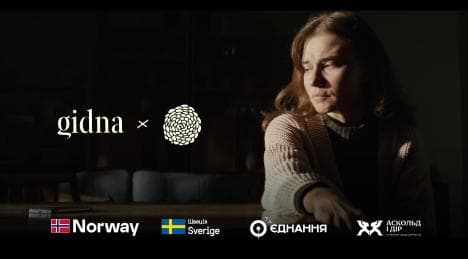
War has numbers, but behind the statistics, there are real human lives that need public support and understanding. As of June 2025, more than 70,000 Ukrainians are officially considered missing, and around 8,000 are held in russian captivity. Their families have lived in uncertainty for years, unable to grieve the loss or hold on to hope for the return of a husband, son, father, or brother.
Ambiguous loss is officially recognized in psychology as a form of trauma. Research shows that prolonged exposure to this state affects life quality, as well as mental and physical health, and in the absence of support, may be passed on to future generations. Despite this, in Ukraine, the topic of ambiguous loss remains stigmatized, and seeking psychological help is still often perceived as a sign of weakness.
That is why the GIDNA project of the Future for Ukraine charitable foundation, which provides free professional psychological support to women, has been advocating for the topic of ambiguous loss for two years now, so that women are not afraid to seek help.
The video “Ambiguous Loss Is a Trauma” is the second joint project by the Future for Ukraine foundation and Luminance video production, following the short film “Manifesto of the Strong,” which was recognized as the Best Social Video at the 6th “Svitlo” Film Festival.
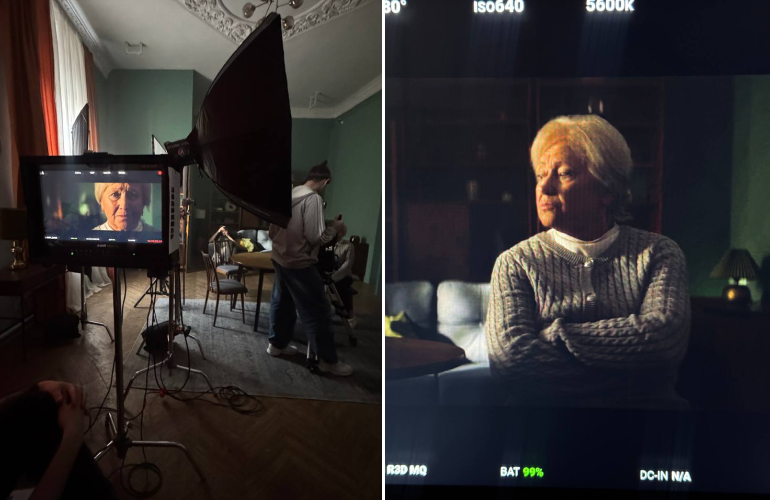
The video project is implemented with the support of the Askold and Dir Fund as a part of the Strong Civil Society of Ukraine — a Driver towards Reforms and Democracy project, implemented by ISAR Ednannia, funded by Norway and Sweden. The contents of these videos are the sole responsibility of CO “CF Future for Ukraine" and can in no way be taken to reflect the views of the Government of Norway, the Government of Sweden, and ISAR Ednannia.
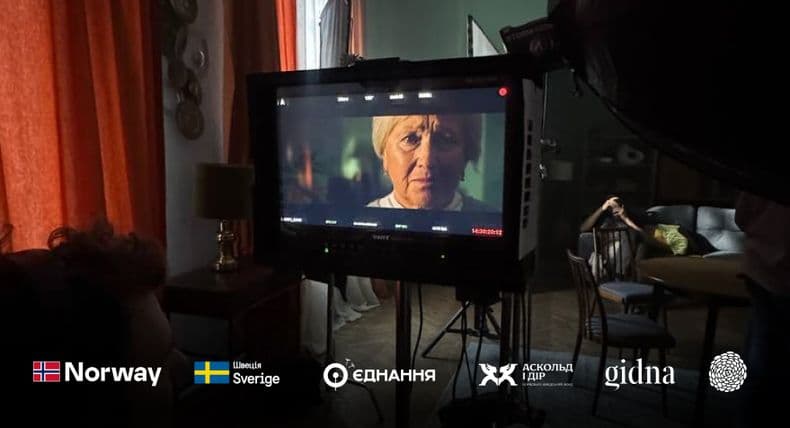
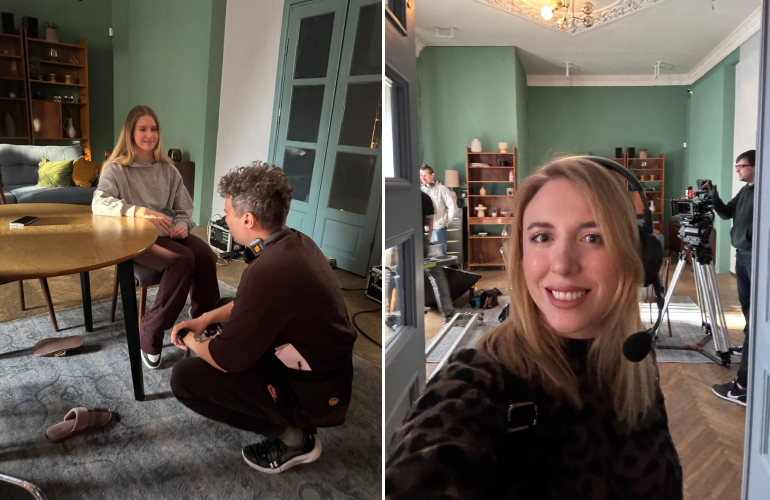
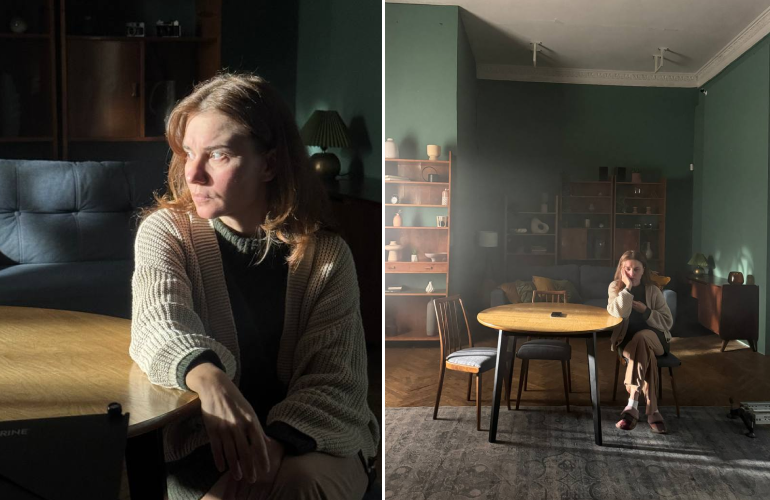
The 3-minute video captures the emotions of women from different generations whose loved ones are either in captivity or missing: from apathy and faint hope to anger, emotional breakdowns, and silence once again. The video will be released in both Ukrainian and English to draw attention not only from Ukrainian women but also to communicate the scale of the problem to international audiences. More about the filming process can be found on the foundation’s website.
Director Denys Stehnii and producer Antonina Sotnykova share insights into the creation of the video, the responsibility of working with sensitive topics, and the project’s expected impact.
- What does the new project “Ambiguous Loss Is a Trauma” mean to you, and what is its main goal?
Antonina:
First of all, to explain the very concept of ambiguous loss. To show that women who are waiting for loved ones to return from captivity, or who have no information about those who are missing, are living in a state of prolonged trauma. And that in such circumstances, it is normal to seek psychological help. We want women to know: they are not alone, they are heard, and support exists — particularly within the GIDNA project.
Denys:
For me, it was an attempt to find the right words and visual language for extremely complex emotional states. I myself did not fully realize the scale of the problem at the beginning. And even more so for Western audiences, for whom this reality is distant. We wanted to show that this is not an abstract issue, but the lived experience of tens of thousands of Ukrainian women.
- What would you like viewers to feel after watching the video?
Denys:
This is not a film with a happy ending. But our message should give hope and lead to positive change. We speak to a woman living in uncertainty and show the world about what hurts specifically for her. So the emotions we expect after viewing are something cathartic — with sadness, but also hope; with exhaustion, but also inspiration and a desire to change something for the better.
- How do you search for the right emotions and visual imagery for the story? Do you talk to real people?
Denys:
There is no room for fiction in projects like this. Everything starts with real stories and conversations with professional psychotherapists. We add nothing of our own but show human experience through cinematic language. Only after that can we allow ourselves to search for a visual form.
- How do you work with sensitive topics? Is there anything that helps prevent emotional burnout?
Antonina:
We run charitable projects like this about once a year so that we can fully dedicate ourselves and achieve a high-quality result. Honest audience feedback and the real impact of the finished work also help prevent burnout.
Denys:
If even one person, after watching the video, decides to support the project, donate, tell a friend, or seek help — it was worth it.
- Can cinema change society? Why?
Antonina:
Absolutely. I realized it back in my 15th year, after making a very simple video that was later shown at a school assembly. Teachers and parents watched it and cried — those were real emotions. That was the moment I realised that through cinema I could communicate with people, convey ideas, and help them see something new and change their perspective.
Denys:
Because cinema speaks directly to the heart and emotions. The beauty of cinema lies in the fact that even the most difficult topics can be presented in a way that does not trigger resistance or emotional defense, instead opening the viewer up, making them ready to listen, absorb the message, and do something with it afterward.
Using film production as a communication tool, the Luminance team continues to raise socially important issues that are often spoken about only in whispers.
Their plans include another project in support of veterans returning from the front. “PTSD symptoms, lack of support, and lack of understanding from society — this is the reality veterans face today. We need to build this bridge back to civilian life for our defenders,” Antonina Sotnykova is convinced. Denys stays quite philosophical about future social projects: “I would like public awareness to grow to a point where we no longer need to highlight sensitive topics. But we are here, and we must respond to the demands of our time and circumstances.”

Do not miss the release of the video “Ambiguous Loss Is a Trauma”; follow updates on the foundation’s website.
If you or your close ones are experiencing ambiguous loss, please reach out to the GIDNA project — here, every woman deserves to be heard and to find support that helps her move forward.
This content is produced by the CO “CF Future for Ukraine" with the support of the Askold and Dir Fund as a part of the Strong Civil Society of Ukraine — a Driver towards Reforms and Democracy project, implemented by ISAR Ednannia, funded by Norway and Sweden.
The contents of this video are the sole responsibility of CO “CF Future for Ukraine" and can in no way be taken to reflect the views of the Government of Norway, the Government of Sweden, and ISAR Ednannia.