The prolonged war continues to drain the country’s resources. Providing adequate social support to vulnerable groups — particularly children with autism spectrum disorders (ASD) — is becoming increasingly difficult due to a shortage of qualified specialists and the heavy burden on state-run inclusive centers across the regions.
Many Ukrainian families raising children on the autism spectrum have been left to face this challenge on their own: how to find the resources to continue corrective therapy, which is critical to a child’s further development.
At times like these, nonprofit organizations and responsible businesses get involved. Through consistent, systemic support, they help sustain society and provide assistance where it might otherwise seem unattainable.
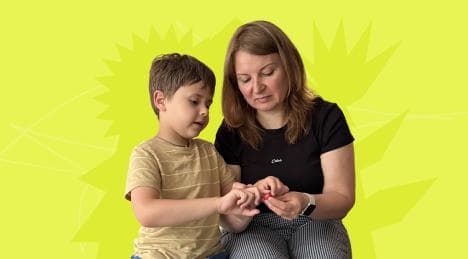
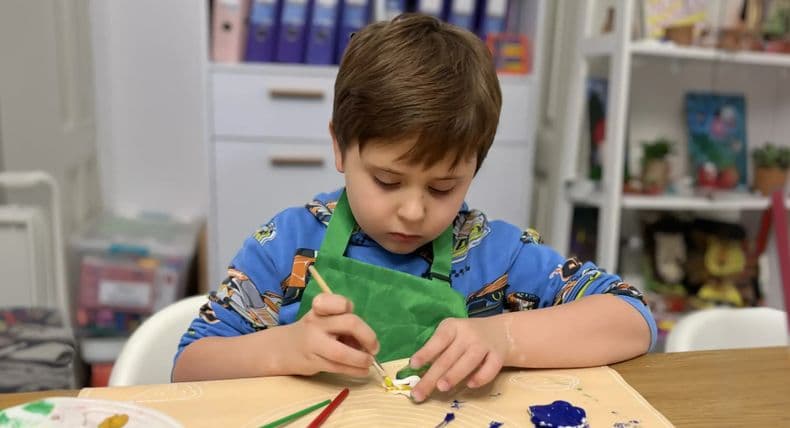
For the third consecutive year, LEVCHYK SPECTRUM HUB, a center for adaptation and corrective support, has been delivering comprehensive developmental programs for children with ASD. The center operates in Lviv and Mykolaiv and is fully funded by the Future for Ukraine Foundation through charitable contributions from the partners, grantors, and donors, with the support of patron Vadym Stolar. As a result, dozens of Ukrainian families who require qualified specialists in sensory-motor integration, adaptive and behavioral therapy, as well as speech therapy and psychological support for their children on the spectrum, can receive these services free of charge.
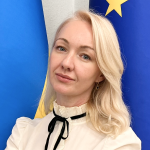 Olena Nikolaienko, president of FFU USA.
At LEVCHYK, we don’t just provide targeted assistance to children with autism spectrum disorders. We help shape a society without barriers to development, education, and self-realization. We work systemically — from supporting children and their families to educational programs for communities and professionals in the field. Furthermore, we strive for a world where not only children learn to adapt to society, but society learns to embrace diversity with respect for everyone
Kateryna, the mother of five-year-old Ania, admits that LEVCHYK in Lviv became a huge source of support for her personally, as she found people there who are going through a similar path — people she can talk with or ask for advice:
“While our children are in their sessions, parents gather in the hallway and form a small support group of our own. You have to be a doctor, a dietitian, and a psychologist all at once, constantly learning, working on yourself and with your child, while also finding time for yourself. If you don’t replenish your own resources, you won’t be able to give anything to yourself, your family, or your children.”
Among the partners supporting the LEVCHYK charitable project is Nova Ukraine, a nonprofit organization that provides humanitarian aid to the people of Ukraine and raises awareness about Ukraine in the United States and worldwide.
Also, over the past year, the Pfizer Foundation contributed $50,000 to support children with ASD under the care of Future for Ukraine.
Since September 2024, Nova Ukraine has provided $84,150 in grant funding to Future for Ukraine to implement a system of long-term support for families raising children with autism spectrum disorders.
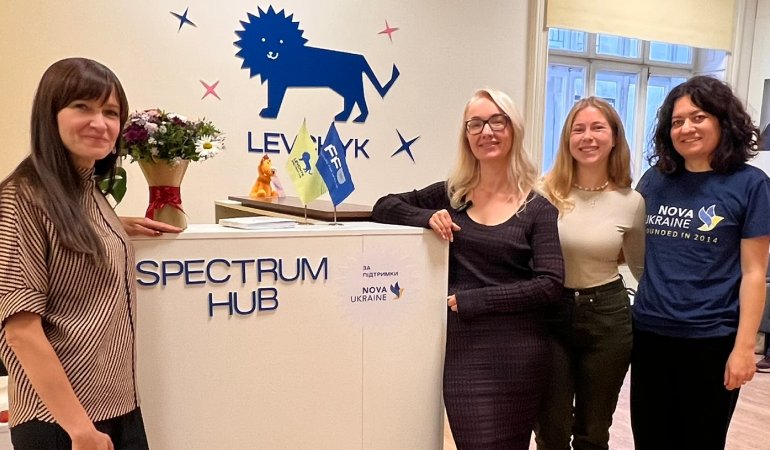
Today, thanks to this grant, corrective support is provided to 16 children in Lviv and 25 children in Mykolaiv. The Nova Ukraine grant enabled the launch of the hub in Mykolaiv and to ensure the sustainability of the corrective support program in Lviv.
 Olha Hliuza, Head of the Helping Children direction at Future for Ukraine.
Through our partnership with Nova Ukraine, 34 children in Lviv and 25 children in Mykolaiv have already received free corrective programs. Among them is Sashko Lobanov, who attends the hub in Lviv. He showed remarkable progress in the early stages of the donor-funded scholarship. But unfortunately, Sashko and his mother were hit by a car accident, which led to serious health issues and a significant regression in his skills. Our partners decided to continue supporting Sashko and extended financial assistance for another year-long program. Today, Sashko is regaining his lost skills, and his parents repeatedly express their gratitude for this opportunity, which is invaluable for their family
Yevheniia Chuchko, Social Projects Manager at Nova Ukraine, notes that this scholarship-based support model has proven to be highly effective. The team regularly visits LEVCHYK centers, communicates with beneficiaries, and sees tangible progress in children’s development.
Over nearly three years of operation, LEVCHYK SPECTRUM HUB has delivered more than 18,000 corrective therapy sessions for children on the spectrum, supported by partners and donors. Today, LEVCHYK works not only with children but also provides comprehensive support to families, helping them create a stable and supportive home environment.
LEVCHYK SPECTRUM HUB holds particular significance for the Mykolaiv region, where the center opened in November 2025 with the support of local authorities. According to preliminary estimates from the Department of Social Protection, more than 300 children with a confirmed autism diagnosis live in this frontline city. For parents, the opening of a free corrective center has become a true lifeline.
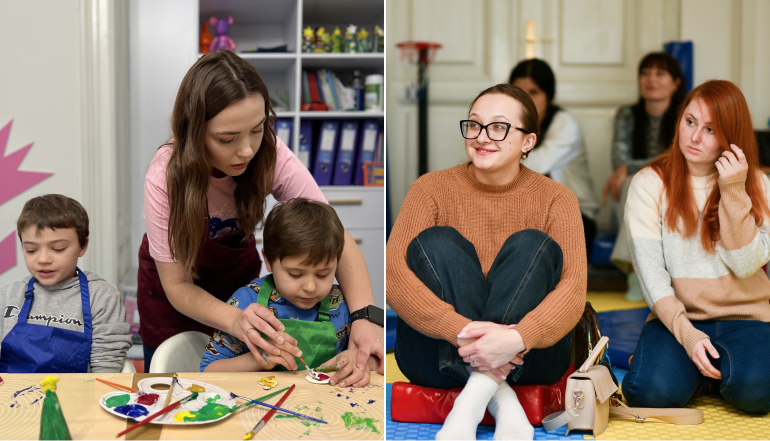
Regular corrective therapy is essential for the full development of children on the autism spectrum. Here, they learn basic self-care skills, how to recognize emotions, communicate with peers, and overcome fear of new people and sounds. These skills give them a real chance to study in mainstream schools alongside their peers and to live independently in the future.
 Anna Kovalova, CEO of Future for Ukraine.
In just a few months of operation, the Mykolaiv hub has provided around 450 corrective sessions in sensory-motor integration, ABA therapy, and psychological counseling. The hub currently serves 31 children, with 12 more on the waiting list. The center currently employs six educators and one administrator, and we are in the process of recruiting teachers and therapists. We are also developing a dedicated parent support program to help families continue the therapeutic process at home in an engaging and accessible way
Through the joint efforts of donors and partners, long-term support for children on the autism spectrum is becoming possible — giving them a real chance for a better future.