When we talk about returning to independent living after limb loss, we mean, first and foremost, basic everyday activities: going for a walk with one’s child, shopping for groceries, using public transport, or returning to work.
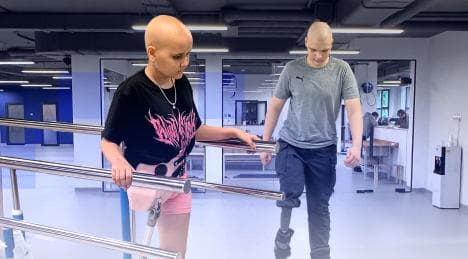
Comprehensive prosthetic care and rehabilitation help restore lost mobility. Future for Ukraine has already provided a full cycle of advanced prosthetic care to more than 130 Ukrainians — veterans and civilians, including people with multiple amputations. The total value of this assistance exceeds USD 2.4 million. FFU’s prosthetics program is funded through grants and donor contributions. The foundation’s ongoing work is also supported by its patron, Vadym Stolar.
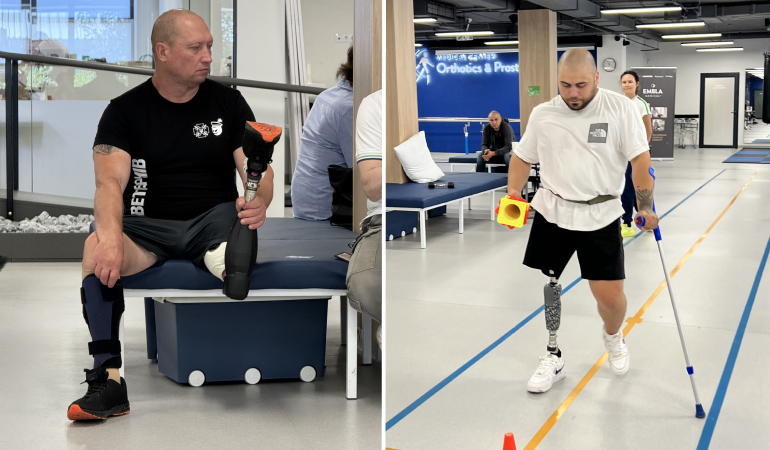
However, even the most advanced prosthesis cannot, on its own, guarantee a return to independent living. Independence largely depends on the environment in which a person lives and the accessibility of public transport, workplaces, services, and essential information.
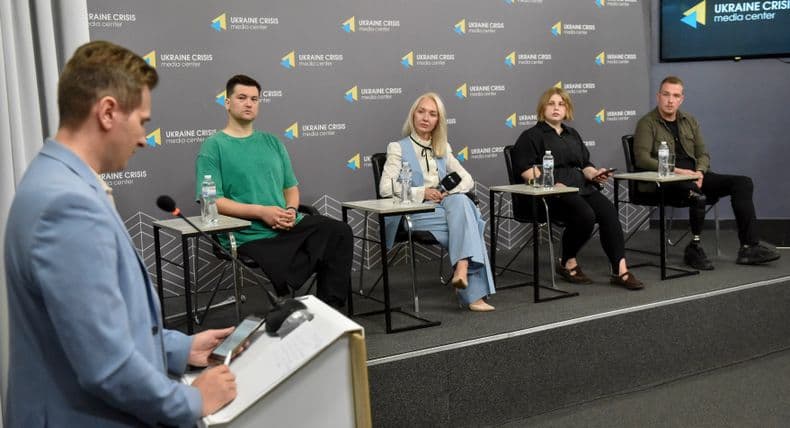
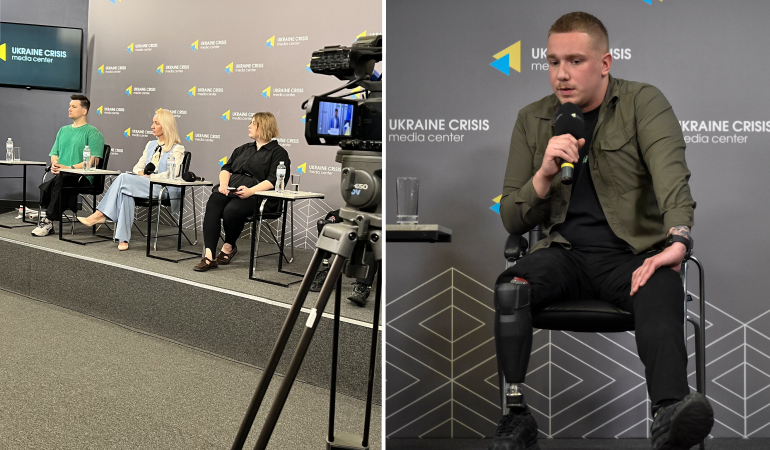
These issues were discussed during a press conference at the Ukrainian Crisis Media Center, where Future for Ukraine presented the findings of its study, “Assessment of Environmental Accessibility for War Veterans with Limb Loss in Ukraine”. Read more about the study’s methodology and findings in our previous article.
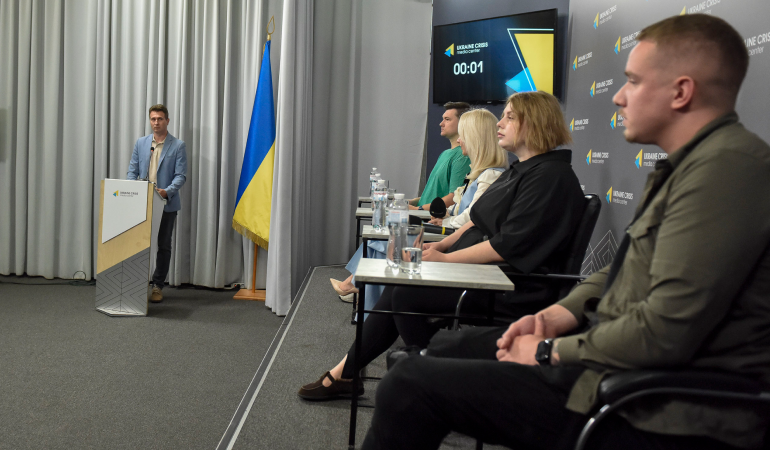
During the event, FFU representatives — President of Future for Ukraine USA, strategist, and the foundation’s international fundraising lead Olena Nikolaienko, together with MEAL Manager Anna Lanchuk — presented the study’s key findings and proposed solutions for improving accessibility.
Guest speakers Oleksandr Chaika and Ruslan Topchan — veterans of Russia’s war against Ukraine who have experienced limb loss — spoke about the barriers they encounter in everyday life and shared their perspectives on the changes needed in the system of recovery and social adaptation for veterans.
 MEAL Fund Manager Anna Lanchuk
“After analyzing the responses of 204 participants, we identified recurring problems. After leaving a rehabilitation center, people return to cities, towns, and villages across Ukraine, where the environment is largely inaccessible to veterans with limb loss. The government invests enormous resources in treatment and rehabilitation. But true independence begins beyond the doors of a rehabilitation center”
75.7% of respondents regularly encounter physical barriers
Physical barriers remain one of the main challenges requiring systemic solutions. They also directly hinder veterans’ return to work. Reaching the workplace and then completing a full working day can be a significant challenge for a person with limb loss.
 Oleksandr Chaika, a veteran and participant in FFU’s prosthetics program
“The most difficult place is the metro. And I’m not only talking about the lack of elevators leading directly to the platform, but also about people’s attitudes. I often have to push my way through the crowd just to board a train, let alone get a seat”
Nearly 40% of the veterans surveyed are not working due to health conditions, even though most are of working age. This is caused not only by physical barriers on the way to work and inaccessible working conditions, but also by employers’ limited understanding of how to create appropriate conditions for veterans with disabilities.
 Ruslan Topchan, a veteran, civic activist, and expert at the National Assembly of People with Disabilities of Ukraine
“Today, a significant proportion of veterans have disabilities. In Kyiv, public institutions and businesses are more willing to employ these professionals, but the situation in other regions is dramatically different. Many companies are reluctant to take responsibility for employing veterans. Businesses therefore need information and training on how to implement accessibility policies”
A coordinated recovery pathway is essential to veterans’ independence
For a prosthesis to truly help a person return to independent living, there must be a clearly defined pathway for further recovery and adaptation. A person may receive a prosthesis but not know where to have it serviced. They may be ready to return to work but unsure where their experience and skills could be useful or what employment opportunities are available to them.
“This is why there must be a single coordination point connecting veterans with the system. It would provide people with all the necessary information about recovery, prosthesis maintenance, and available services, as well as a clear pathway for their next steps,” Anna Lanchuk emphasized.
Accessibility must be developed professionally and with people’s needs in mind
The rapid increase in the number of people with disabilities as a result of the war has created a challenge for which no country could have been fully prepared. Ukraine is devoting significant resources to the treatment and rehabilitation of veterans. At the same time, the effectiveness of these efforts depends on whether people can benefit from the results of their recovery in everyday life.
Ruslan Topchan noted that, to achieve meaningful improvements in accessibility, the government must engage civil society and the business community. Working together will make it possible to build a genuinely people-centered system and involve specialized organizations with the necessary experience and expertise.
Based on the study findings and expert discussion, the foundation identified several priorities for its continued work on accessibility: creating a coordinated support pathway for veterans after prosthetic care, improving access to psychological support, training employers in accessibility principles, and adapting public transport and workplaces.
“Behind every figure is a person who sacrificed their health while defending the future of our country. It is our duty to do everything possible to help them return to independent living. That is why we have developed practical solutions that we will present to the relevant ministries and local authorities,” Olena Nikolaienko concluded.